How the Fed Rate Affects Your Wallet

Imagine you're sitting down to review your monthly bills. Your credit card minimum payment increasing up. Your car loan rate seems higher than what your friend got two years ago. Your savings account is finally paying you something or maybe it's still paying almost nothing. You didn't change your habits. So why do these numbers keep shifting?
The answer, more often than not, comes down to a single number set by a small group of people in Washington, D.C. a number you probably hear about on the news but may never have fully connected to your own wallet.
The single most important idea: when the Federal Reserve raises or lowers its benchmark interest rate, it changes the cost of borrowing money across the entire economy — and that cost flows directly into your credit cards, loans, and savings account.
Let's break down exactly how that happens.
The Basic Mechanism: What It Actually Means to Set a Rate
Before we get to the official name, let's understand the underlying idea.
Banks lend money to each other constantly overnight, in massive amounts to keep their books balanced. Every day, some banks have a little extra cash sitting around, and others need to borrow a bit to meet their requirements. When these banks lend to each other, they charge interest, just like any lender would.
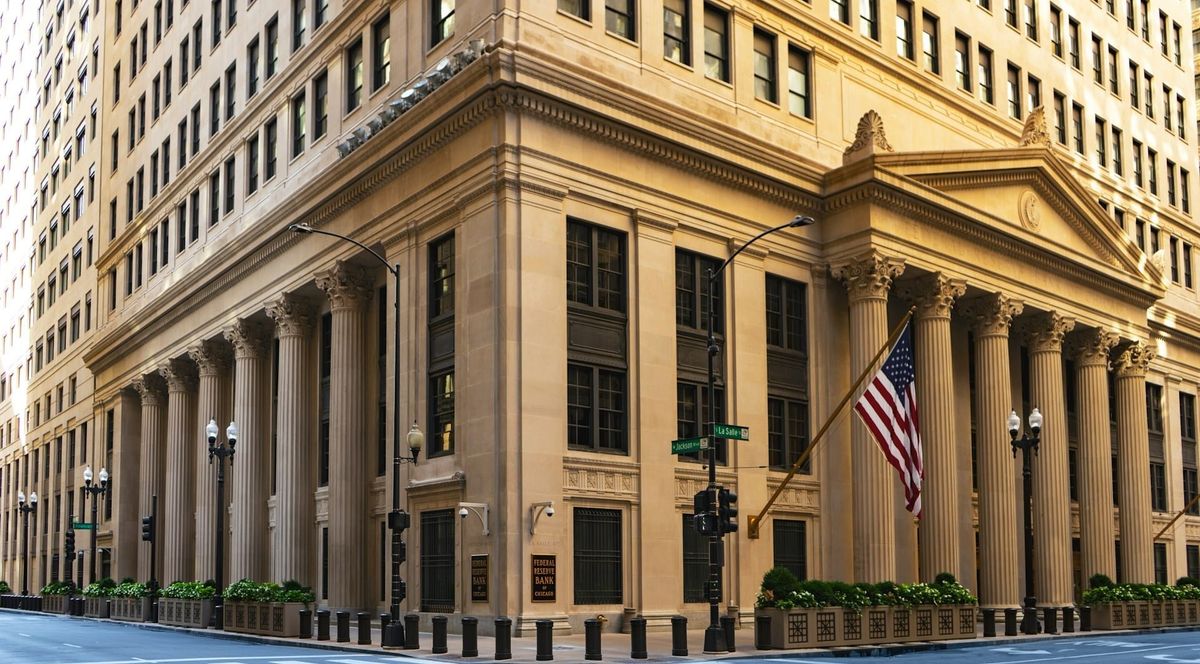
The Federal Reserve the central bank of the United States sets a target for what that overnight lending rate between banks should be. It then uses its tools to keep borrowing costs in that range.
This is what's formally called the federal funds rate, or more casually, "the Fed rate" or "the Fed's benchmark rate."
Now here's the key part: when banks pay more to borrow from each other, they charge more to lend to you. And when they pay less, they can charge less. The Fed's rate is like a dial on the cost of money throughout the whole system turn it up, and credit gets more expensive everywhere. Turn it down, and it gets cheaper.
How It Reaches Your Credit Card
Banks don't make up your credit card interest rate from scratch. They typically start with a baseline often something called the prime rate, which banks use as a standard reference point for consumer lending. The prime rate almost always moves in lockstep with the federal funds rate. Historically, it runs about 3 percentage points above it.
So if the Fed raises its rate by 0.25%, the prime rate rises by the same. And your credit card rate which is usually set as the prime rate plus whatever margin your card issuer adds goes up too.
Here's what that looks like in real life:
Say you're carrying a $3,000 balance on a credit card at 20% interest. At that rate, if you're only making minimum payments, you're paying roughly $600 a year in interest before you've paid down a single dollar of principal. If the Fed raises rates and your card climbs to 22%, you're now paying around $660 a year just in interest on the same balance. That's an extra $60 a year not catastrophic on its own, but it compounds over time, and it affects anyone carrying a balance.
Credit card issuers are also watching this closely. They benefit when rates rise, because most credit cards have variable rates meaning the rate automatically adjusts. You don't have to agree to it. It just happens. That's built into the terms most people scroll past when they sign up.
How It Affects Loans Cars, Mortgages, and More
The same logic applies to bigger loans, though the connection is slightly less direct.
For something like a car loan or personal loan, lenders look at the broader interest rate environment — shaped heavily by the Fed and set their rates accordingly. When the Fed has been raising rates, a car loan that might have been 4% a year ago could be 7% or 8% today. On a $30,000 car financed over five years, that difference adds up to thousands of dollars in extra interest paid over the life of the loan.
Mortgages are a little different. They're more closely tied to long-term bond markets (specifically the 10-year Treasury yield) than to the Fed rate directly. But the Fed still shapes the overall lending environment, and when the Fed raises rates aggressively, mortgage rates almost always rise too — sometimes dramatically, as many homebuyers discovered in 2022 and 2023.
A $300,000 home financed at 3% costs about $1,265/month in principal and interest. At 7%, the same loan costs about $1,996/month. That's over $700 more every single month — for the same house. That's why home affordability changes so sharply when rates move.
Lenders aren't being arbitrary. They're responding to the same underlying cost: money costs more to borrow when the Fed raises rates, so they pass that cost along to you.
The Other Side: What It Does to Your Savings
Here's where the story gets a little more balanced.
When the Fed raises rates, borrowing gets more expensive but saving becomes more rewarding. Banks need deposits to fund their lending. When rates are high, they're more willing to pay you more to keep your money with them, because they can turn around and lend it out at higher rates and still make a profit.
This is why high-yield savings accounts were paying close to 5% in 2023 and 2024, after years of paying almost nothing (sometimes 0.01%). If you had $10,000 sitting in a regular savings account at 0.01%, you were earning about $1 a year. At 4.5%, that same $10,000 earns $450 a year — without doing anything differently.
That said, not all banks pass these higher rates to savers equally. Traditional big banks often keep savings rates low even when the Fed raises rates, because they know many customers won't bother to move their money. Online banks and credit unions tend to be more competitive, because they have to be they don't have the branch network and brand recognition to keep customers otherwise.
This is where paying attention actually pays off.
Think of it like water pressure in a building.
The Fed controls the pressure at the main valve. When it turns the pressure up, water flows faster and stronger to every faucet in the building — your credit card, your car loan, your mortgage. When it turns the pressure down, everything slows. You're not directly touching the valve, but every faucet in your apartment is affected by it. Knowing where the valve is — and which direction it's being turned — helps you understand why your bills behave the way they do.
Why the Fed Moves Rates in the First Place
The Fed doesn't change its rate just for fun. It has two main jobs: keeping inflation under control and keeping unemployment low. These goals sometimes pull in opposite directions.
When inflation is high — meaning prices are rising faster than people can keep up with the Fed raises rates to make borrowing more expensive. This slows spending and investment, which cools price growth over time. This is what happened starting in 2022 when inflation hit 40-year highs.
When the economy is struggling and unemployment is rising, the Fed cuts rates to make borrowing cheaper and encourage people and businesses to spend and invest. This is what happened in 2020 when rates were cut to near zero during the COVID shutdown.
For you, the practical implication is this: when you hear that inflation is high, there's a good chance rates are going up — which means debt is getting more expensive and saving is getting more rewarding. When you hear the economy is slowing, rates may be falling — which means borrowing gets cheaper, but so does the return on your savings.
What This Means If You're Carrying Debt or Building Savings
You don't need to predict what the Fed will do next. But understanding the mechanism helps you make better-timed decisions.
If rates are high and you're carrying variable-rate debt (like a credit card), you're paying a premium right now. Paying that down faster saves you more than it would have when rates were near zero.
If rates are high and you have cash sitting in a regular checking account earning nothing, you might be leaving meaningful interest on the table by not moving it to a higher-yield account.
If rates are falling and you've been waiting to refinance a loan or lock in a mortgage, a rate cut environment may open a window — though timing these things perfectly is nearly impossible and usually not worth trying.
One honest limitation worth naming: the Fed rate is just one factor in your personal financial picture. Your credit score, your lender's policies, how long you've been with a bank, and what type of loan or account you have all matter too. The Fed sets the floor and ceiling of the room but where you land within it depends on your own situation.
What to Watch For
Keep an eye on when the Federal Reserve holds its policy meetings they happen roughly every six to eight weeks, and the decision about whether to raise, lower, or hold rates is announced publicly. You don't need to read the full statement. Just notice the direction.
If rates are being raised, check what you're earning on your savings. There's a good chance you could be earning more somewhere else.
If rates are being cut, check whether any variable-rate debts you're carrying will actually adjust downward — and how quickly.
The Fed rate is one of the most consequential numbers in your financial life, and it's updated in real time. It's worth having a line of sight on it.
You can track the current Fed rate — and see how it's been moving — on the Sora Finance Live Economic Dashboard. It's a quick way to stay oriented without having to dig through news headlines.